Thursday, September 8, 2016
Are you properly insuring your other structures?
There’s more to your homeowner policy than just coverage for the house you live in. It also provides coverage for other structures on your property.

These may include all structures and buildings not sharing a foundation with your house. Most insurance policies provide 10 percent coverage for other structures. For example, if you insure your home for $200,000 an additional limit of $20,000 applies to all other structures. Remember that if you have a total loss, you don’t receive $20,000 for each structure, but $20,000 total for damage to all other structures. A large detached garage by itself can exceed this amount in many cases.
So how do you know you have appropriate coverage?
If you have detached structures on your land, it is best to consult with your local independent insurance agent to discuss options. A pool house, large barn, garage with living space, fence, freestanding deck and stable may fall into different categories, and your agent can help make sure you have the correct coverage to protect you in the event of a total loss.
While the chances of losing all your other structures at one time are small, you want to secure enough coverage to protect your investments. You may need more than the 10 percent standard coverage for appurtenant structures.
Also consider that many different types of structures could qualify for coverage on your policy, and it’s important to select the correct category based on usage. Your agent can advise you on the information you will need to provide to obtain the coverage that’s right for your situation.
A good example is a barn. Barns can be built in many different ways from a variety of materials. By providing accurate information on usage and construction, you can be assured that your property is protected.
If your other structure is being rented, is used for a business or was not reported, you are most likely not adequately insured. Your agent has the expertise to guide you.
Finally, don’t forget to assess how much insurance protection you need for personal property housed in your other structures. For example, a home woodshop in your barn could have valuable equipment you’ll want to protect. Ask your agent for advice.
The best way to look at it is to think of insuring your other freestanding structures the same way you would your home. You want 100 percent coverage for each structure in the event of a loss. Replacement of these structures is typically less expensive than a home, but those costs can add up and represent a significant loss.
Coverages described here are in the most general terms and are subject to actual policy conditions and exclusions. For actual coverage wording, conditions and exclusions, refer to the policy or contact your independent agent.
Wednesday, November 4, 2015
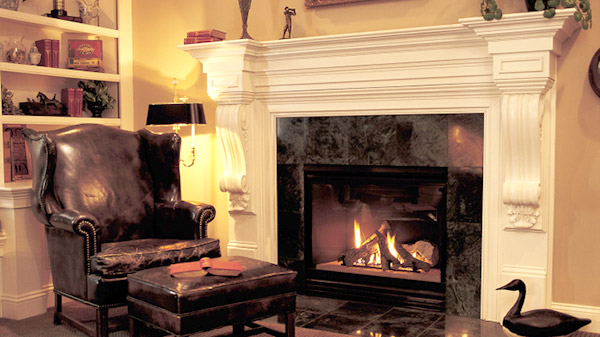
Flue season: Have your fireplace and chimney inspected
Home heating fires are the second leading cause of home fire deaths after cooking fires, according to the National Fire Protection Association. Fireplaces, chimneys and flues account for a significant number of home heating fires.
Homeowners with a wood-burning fireplace or solid fuel stove or insert can protect your property and your family by having a qualified professional inspect and clean your chimney at least annually to prevent a buildup of creosote. Creosote is a tarry residue or solid organic compound caused by incomplete combustion of wood that can build up in chimneys and ignite a chimney fire. A heavily used fireplace or stove may require periodic cleaning throughout the heating season. NFPA statistics show that failure to clean creosote from chimneys was the leading factor in 28 percent of the home heating equipment fires between 2007 and 2011.
The U.S. Fire Administration offers a series of videos showing how to safely build and tend a fire. Additional tips for safe fireplace and wood stove use:
-Equip your fireplace with a sturdy glass or metal screen to stop sparks from flying into the room.
-Inspect your fireplace’s flue prior to use for any obstructions or blockage by using a flashlight and looking up the flue. This also assures that the flue’s damper control is open prior to lighting the fire.
-Keep anything that can burn at least three feet away from the fireplace or wood stove. NFPA statistics show 53 percent of fires resulting in home heating fire deaths were caused by having heating equipment too close to things that can burn, such as upholstered furniture, clothing, mattresses or bedding.
-Only adults should build and tend a fire; enforce a three-foot “kid-free zone” around fireplaces and wood stoves.
-Always use the right kind of fuel, specified by the manufacturer, for inserts. For fireplaces and wood stoves, use only seasoned wood. Green wood increases creosote buildup.
-Do not burn cardboard, wrapping paper or other rubbish in the fireplace or wood stove.
-Never use lighter fluid or any flammable or combustible liquids to start the fire.
-Make sure a fully charged fire extinguisher is nearby and accessible.
-Install smoke alarms and carbon monoxide detectors as recommended, change the batteries twice a year, and test them according to manufacturer’s recommendations, usually monthly.
-Put out fireplace fires before going to sleep or leaving your home.
-Allow ashes to cool prior to cleaning out a fireplace or wood stove. Ashes that seem cool may contain concealed hot embers for several days after your last fire. Place the ashes in a covered metal container and keep the container outdoors a safe distance away from your home or any buildings.Have fireplace inserts or wood stoves installed by a qualified professional who can meet the established NFPA 211 standard. Never attempt to install them yourself. According to the NFPA, 10 percent of fires involving heating appliances actually involve the ignition of structural members where flues or chimneys pass through a building’s wall.
Sunday, October 25, 2015
Business Tips: Controlling Risk For Property Owners
Losses that occur on property you own can affect your livelihood and that of your tenants. They also can affect your insurance rates and eligibility. Without the proper controls in place, you could be saddled with the responsibility of owing for injury or damages that you did not cause.
RECOGNIZE THE RISKS
When you understand the risks you face as a property owner and lessor, you can better manage them. Consider these scenarios:Natural perils – A tornado sweeps through town, damaging your building and your tenants’ contents.
Fire – A grease fire starts in a restaurant at one end of your building. Before it is extinguished, fire damages multiple units and tenant contents.
Third-party injury or illness – A patron slips and falls in the parking lot, spraining her ankle.
Change in occupancy – A restaurant replaces a retail store in one of your units. As a property owner, you want to determine if the current sprinkler system is able to handle the demands of a restaurant.
Change in tenant operations – A retail craft store expands its operations to include pottery making. With this expansion, your tenant adds kilns to heat-treat ceramic projects.
Vacancy – Your unoccupied building is vandalized, resulting in damaged property.
REVIEW THE RESPONSIBILITIES
A well-designed lease agreement can assist owners in transferring responsibility for payment due to bodily injury or property damage to the legally responsible party. Consult with legal counsel when evaluating your current lease or other formal contract. When consulting with your attorney, consider whether your agreement:-is signed by all tenants
-contains appropriate anti-subrogation wording and indemnification–hold harmless provisions favorable to you and acceptable under your state’s laws
-authorizes you to develop, change and enforce rules and regulations for the premises
-defines which areas you control and which the tenant controls
-defines the maintenance obligations of all parties while specifying the scope of the operations and the steps you will take if the tenant defaults on these obligations
-grants you the right to inspect the leased premises for conformance with the lease provisions concerning maintenance and to point out to the tenant any obvious hazards
-requires the tenant to obtain permission before performing any building alterations
-contains provisions regarding use of hazardous substances, dispensing of liquor and other activities that increase the risk of loss
-requires service contractors who come on your premises to provide certificates of insurance verifying adequate limits of insurance and appropriate state licenses, where applicable
-requires tenants to obtain specified liability insurance on behalf of the owner, with you listed as an additional insured on a primary basis. Make sure you obtain proof that the tenant has acquired and maintains all required insurance.
Consult with legal counsel to familiarize yourself with state laws before you lease space to bars, restaurants or stores that sell liquor.
While it is your duty to live up to your obligations as a property owner, it is also wise to make your tenants take responsibility for their actions and premises upkeep.
Your local independent insurance agent is there to help you maneuver around the challenges you face as a property owner. Contact your agent whenever a new tenant moves into the building, a current tenant changes its operations or part of the building becomes vacant for 30 days.
Wednesday, October 7, 2015
Homeowner Policy: Section 1
-Coverage A Dwelling: This coverage pertains to the actual house itself. The limit shown on the policy in this section is the amount of insurance the policy will pay out if the house was totally damaged. It Is important to understand that this limit of insurance should be based on Reconstruction Costs (the amount it would take to rebuild the house) instead of Market Value (the amount you can buy or sell the house on the real estate market). For more details on this check out our Reconstruction Cost vs Market Value article. The dwelling limit of insurance will drive the other three parts of Section 1 Property so for example purposes let's say our Coverage A Dwelling limit is $200,000.Friday, December 21, 2012
Waiver of Subrogation, What is it?
Often you will see the Waiver of Subrogation in commercial leases. Landlords will require that tenants have this verbiage in their insurance policy so that if a claim occurs at the leased location that the tenant's insurance company cannot come back after them for damages. The landlord, however, would be less inclined to have this wording on their policy since it would mean they and their insurance company would not be allowed to go after their tenant after a claim. A building owner and their insurance company usually have more to lose (the building and its rental income) than the tenant does so they would be very interested in being able to go back after a negligent party.
There are two example of where a landlord may want the Waiver of Subrogation wording on their own insurance policy. The first is if they are renting to a family member or friend who they know doesn't either have enough assets or money to be able to cover them in case of a claim, they may not want their insurance company to be able to go after them to collect for damages. The second is if the landlord and tenant are owned by the same person or organization. In some cases, usually for legal or tax reasons, a person may have one company that owns the building and another company that owns the business that is the tenant. In those cases you would probably want both the landlord and tenant policy to have a Waiver of Subrogation clause in their policies so that you don't have your two insurance companies fighting over payout.
Another place where you will see Wavier of Subrogation is in situations where companies or organizations will subcontract work to other companies or organizations. Often, if a business is going to hire another business to do work on their behalf they will request that the subcontractor have Wavier of Subrogation on their policy. Similar to the Landlord/Tenant relationship, if the contractor requires the subcontractor to have Waiver of Subrogation on their policy it means the subcontractor, if a claim arises, is not able to go back after the contractor for money.
When entering into a lease or a business contract it is important to know if you are going to be required to have Waiver of Subrogation and if you have it or not in your insurance policy. It is best to have both your legal team and your insurance professionals review contracts to make sure you are adequately protected.
Thursday, April 19, 2012
Tenant’s Improvements to the Premises
A
common circumstance surrounding commercial leases involves the tenant making
alterations, or improvementsto the rented premises. A strip mall retail
location could be used for many different types of tenants. It is unreasonable
to assume that the premises is already set up to handle any type of tenant from
a clothing store to a restaurant. For example, a new tenant might have to build
partitions, add refrigeration or install a kitchen.Friday, August 26, 2011
“Wear and Tear” Vs. “Sudden and Accidental”
Two terms that are important to know when it comes to the reason behind an insurance claim. Those terms are “Wear and Tear” and “Sudden and Accidental”.
“Wear and tear” is defined by Wikipedia as “damage that naturally and inevitably occurs as a result of normal wear or aging.” An example on a home would be a house settling over time, a pipe that corrodes and leaks water over several months or years, or a roof that after 15 years starts to drop shingles. All these items would not be covered under an insurance policy as an insurance policy does not cover “Wear and Tear”. Insurance policies cover “Sudden and Accidental” events.
So what is “Sudden and Accidental”? The best way to define it is by giving examples. If a pipe in your house just suddenly burst from pressure or because of freezing that is sudden and was done accidently. If wind blows through your neighborhood and suddenly blows off your roof or chunks of your roof that is sudden and accidental. If a tree falls and damages your home that event is sudden and accidental.
“Sudden and Accidental” events are things people can not totally prevent which is why insurance exists and covers them. On the other hand, “Wear and Tear” damage can be prevented by making sure your property is well maintained and updated. Insurance policies are not maintenance contracts.
So next time you have damage to your property ask yourself is this “Wear and Tear” or “Sudden and Accidental”? If it is “Sudden and Accidental” be sure to call your insurance agent or if you are not sure which it falls under call your insurance agent and let them help you figure that out.
Thursday, July 28, 2011
Special Limits in Your Homeowner Policy
Your homeowners insurance policy places limits on certain types of property. In your policy there is a section titled “Special Limits on Certain Property.” This section will list various items and place a dollar limit on each type of property- such as jewelry, fine arts, guns or money. Why do insurance policies contain such provisions? The homeowners insurance policy is written to provide coverage for the average policy holder. Most of us do not own collections or keep large amounts of cash at our homes. While the policy provides some limited coverage for special types of property, it in no way serves the needs of the unique collector.
There is, however, a solution for the collector or owner of unusual property items. It is possible to amend your homeowners policy, by endorsement, to provide special coverage for unique collection items such as coins or stamps. By asking your agent to include a schedule property floater in your coverage, you can specifically insure items of special interest. The personal property floater also expands coverage for perils not included in the homeowner policy.
Thursday, March 17, 2011
Earthquake Insurance in Ohio!? (Re Post from July 2, 2010)
The recent tragedy that has struck
Also, with this post I would like to also encourage all of you to please be sure to research and see what you might be able to do to lend support to those in
Re Post from July 2nd, 2010:
The big question going around on June 23rd was, “Did you feel the earthquake”. Many thought people were joking, but when they checked their Facebook page and saw that many of their friends in the Ohio area had felt the earth move, they knew the question was legit. The reason Ohioans felt the earth move was just north of us, Canada had a 5.0 magnitude earthquake. Though we are not California or anywhere near California, Ohio still has their fair share of earthquakes. On average Ohio has 5 to 6 earthquakes a year. Year to date in 2010 we have already had 6, so the question that has to be asked of this insurance blog is should people in Ohio carry earthquake insurance? We at Fey Insurance Services feel that it is a good idea to have this coverage. It is something we always quote to our customers. For an average valued house the premium can range from $50 to $80 a year. Though we only have little earthquakes the potential for a large scale quake is there and if that happened the affects would be devastating to a home.Feel free to get in touch with us to inquire about earthquake insurance